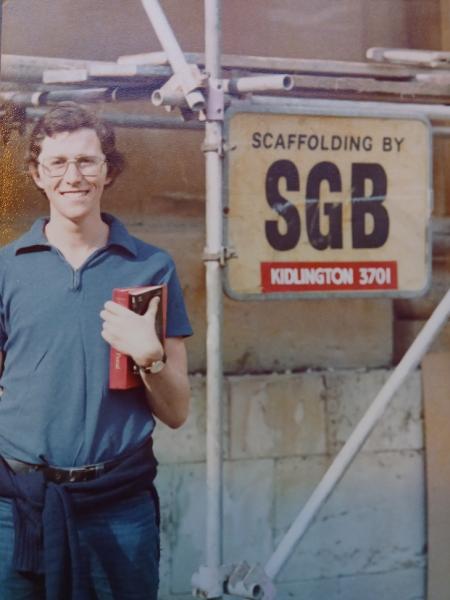
I had four fantastic years at Queen’s, and I owe any academic success I had to my two extraordinary tutors and teachers, Ian Maclean and John Rutherford. I also had had the enormous privilege of being taught by remarkable teachers at school, not least Tony Evans who went on to become a highly influential Headmaster.
The Oxford course was mainly literature based which suited me fine, not least as it meant I could hide some of my linguistic shortcomings. I was guided by a mixture of curiosity, choosing literature which inspired me, and which I didn’t think I could understand without study, and manageable volume. The wonderful Luis de Leon, one of my Spanish special authors only really wrote 15 or so poems. I felt I was digging into something special with tutors who could and did show the way.
Studying languages also meant being with a bunch of people who on the whole were interested in communicating and travelling abroad and speaking to foreigners. And it was gloriously gender balanced.
Building confidence
I was always a reasonably outgoing youth, but studying languages over the years (and I learnt Japanese and Portuguese as well in the Diplomatic Service) really built my confidence in approaching people and working out how to engage them. As my career started and continued I realised that the key requirement was to perform or at least open my mouth and risk getting it wrong. The odd mistake didn’t matter and usually caused some mirth. And the expectation at work was high. My first instruction in Tokyo was to go down to the Ministry of Construction and speak in support of a UK fine bubble sewage treatment equipment firm. In Japanese. Throughout my career I had nothing but encouragement and warmth from my interlocutors. I suspected some of them were trying to imagine doing the same thing the other way round, or as diplomats had gone through the same thing.
Getting to know the world
Travel is not really understanding a people. The experience of living in a country rather than visiting Is totally different. Hotels, trains, buses and tourist restaurants are much the same everywhere. Settling down somewhere, even for a few months, and getting to know and speak to those living their lives around you is so much deeper and more satisfying. You can find people you share a sense of humour with and find people who can become friends and more. And if you can speak you can understand the mindset and the locals’ point of view. When I think of the many countries I have visited, it is those I have lived in which stand out as homes.

Understanding others…
My experience is that people talk quite a lot of nonsense about the characteristics of people of country X or Y. People everywhere are fathers and sons, mothers and daughters. Language establishes the relationships where you can discover why people are as they are, and not least what has happened to them. I think almost all the countries I was posted in had been through a dramatic event (in France and Japan, defeat in different ways in war, the Spanish civil war, massive conflict in DRC and South Sudan). Indeed, I discovered we the British were in a sense the odd ones out. There was for me a direct link between stories, language and developing sympathy and understanding about what was going on in that society and in the minds of those you knew. Everything can be expressed in language, and perhaps especially in listening. That cannot be done by AI or the internet.
…and oneself
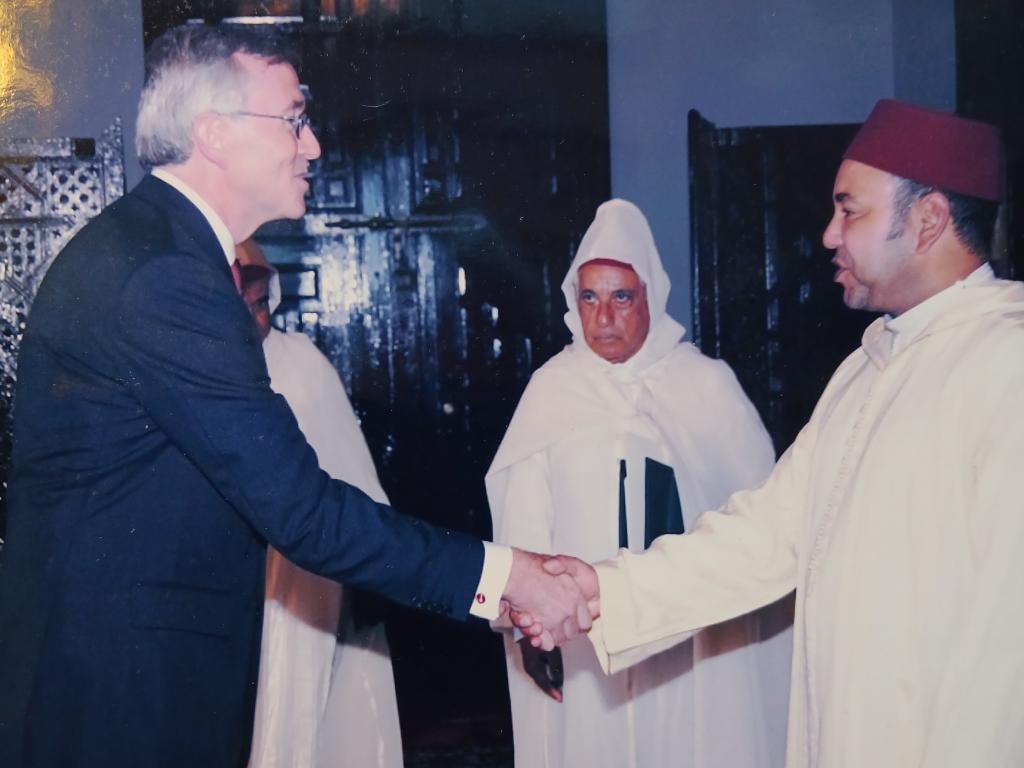
I guess all life experience teaches you who you are. Languages catapulted me out into the world with the intellectual training of the Oxford course, built my confidence, provided colour, fun, and endless different experiences. When I was in Japan I could talk to 128 million people. A few tens of thousands spoke English. The prospect of living in English-speaking only communities in France or Spain, lovely as they are, just seems to me to be missing a massive opportunity. Languages were of course always a central part of the job as a diplomat and the UK has rightly taken pride in a good spread of language ability across the network. That kept me challenged over a career but I was constantly surprised by the delight of meeting someone interesting across the language divide. And finally I have learnt that you do not have to be the best to succeed. In every posting, I have had colleagues who speak the language better than I. But I have been able to make friends and persuade people to do (or not do) things and listening and speaking the language is central to that.
And one nugget
Speaking other peoples’ language makes you speak better English. As a linguist you are conscious of muddled grammar and meaningless verbiage and you tend not to inflict it on a non-English speaker trying to understand you. That’s because you know what it feels like.
Why we must support language study
It is a shocking truth that language learning in the UK is losing support in our schools. This is apparently due to a perception that language exams are difficult or somehow languages are not necessary. On the first concern, yes, languages provide some challenges but surely the exam system should be set up to encourage and reward, not to discourage. And the idea that speaking languages is somehow becoming less relevant seems against the truth, and against the logic of where the UK wants and needs to be as a country. Loss of language learning would be a denial of opportunity for a whole generation of internationally minded young. If we as a country do recognise our need for language ability, in political, cultural and strategic terms, we must surely insist on having some secure language requirement in the curriculum along with STEM subjects and other core competences. And the serious misconception that we don’t need languages must be firmly rebutted. Global communication is increasing, many language speakers are here with us, and international communication and understanding will not be furthered by our country reducing study to a niche. The competitive loss to the UK, and the loss of opportunity for our young to explore and spread our values and be influenced by leading and creative global cultures will be reduced accordingly. That is unless we want to go off to live in a monolingual compound somewhere else as some are doing.
I am very proud of my College starting the Translation Exchange which is promoting languages in schools. I believe there is the need for a wider campaign with heavyweight support. I have signed up!