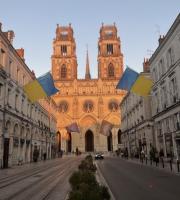
When I announced last year that I had finally been given my British Council placement in Orléans, I remember several peers looking at me with a mix of pity and self-satisfaction before blurting out, “Is that what you wanted? I’m sure it’ll be nice.” I was bombarded by those ‘polite’ little phrases that are anything but polite. People would say “at least it’s close to Paris” as if Orléans itself had nothing to offer apart from its relative geographical proximity to France’s capital. It was incomprehensible to them that I could be eager to live in a city smaller than Oxford. Orléans simply isn’t on the radar of “cool” cities for students. Too provincial. Too close to England. Not sunny enough.
Even though many of my peers were heading far away, off to Djibouti, Guadeloupe or Quebec, I was genuinely excited to spend a year teaching in Orléans. I left England open-minded and rather naively, expecting to eat some good cheese and help teachers with minor classroom tasks. Now, after eight months here, I can confidently say I wouldn’t swap this city for anywhere else. I return to England with un chéri français, more idiomatical French, and newfound friendships.
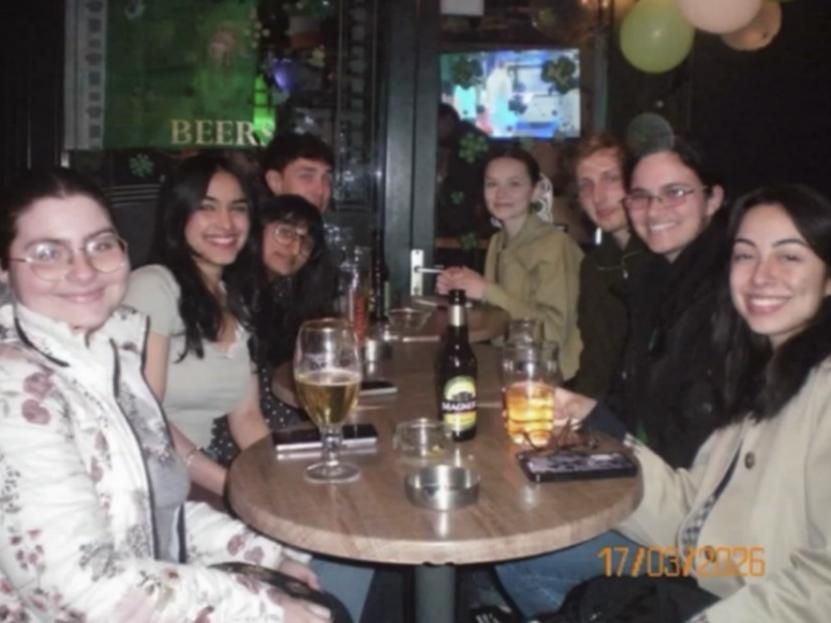
This does not mean that my time in France has been entirely smooth. Between endless bureaucracy, pressure at work, and personal challenges, it has been an emotional rollercoaster that easily rivals Poitiers’ Futuroscope. Before ending on a positive note, it’s worth touching on some of the difficulties I have encountered.
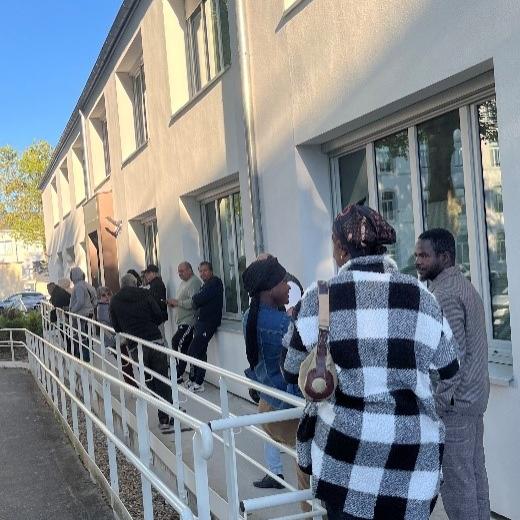
The first is bureaucracy. Upon arriving in France, I faced the Herculean task of enrolling in social security, obtaining a carte vitale, and applying for housing benefits. All of this required high level French and familiarity with what felt like thousands of incomprehensible abbreviations: CAF, APL, Ameli, CMU, CPAM, URSSAF, MGEN, DGFiP. The system often feels so complex that you’re tempted to give up on accessing rights you’re technically entitled to. I quickly realised that in France, nothing is handed to you on a silver platter. You have to actively chase everything, often waiting in long queues outside rundown public buildings from the 70s where there is only one ‘friendly’ employee to assist everyone (who happens to be on a coffee break when it’s your turn).
Navigating French administration is like playing a game that you do not know the rules to (but nobody else really does for that matter). As the secretary at my lycée explained, “c’est le chien qui se mord la queue” (it’s like a dog chasing its own tail): no bank account without housing, no housing without a bank account, no contract without a bank account, no bank account without a contract, and so on.
As frustrating as this sounds, it ultimately represents only a small part of my experience. Despite working more than expected, I discovered a genuine liking for teaching. Over the year, I’ve prepared and taught sessions of 30 minutes to an hour to classes of around 12 students from varied backgrounds and abilities. Being alone and teaching English to teenagers (barely younger than me) who often had little interest in the subject was unsurprisingly daunting. In my inner-city lycée, many students live in HLMs (social housing), some being asylum seekers who are still learning French themselves. This makes the job more challenging, but also far more rewarding.
I found real satisfaction in creating my own activities and delivering lessons on aspects of English culture rarely covered in class. I had students reenact Poe’s short stories, write agony aunt letters and horoscopes, take part in blindfolded treasure hunts, participate in debates and play games like Pictionary, Guess Who, and noughts and crosses. Out of fear of creating dull lessons, I pushed myself creatively to find activities that would interest all my students, and it paid off, since most students seemed to genuinely look forward to my classes.

Over time, I built real connections with many of them. Now, when I walk through the corridors, students scurry over to say, “Hello mister…” or simply “bonjour” (we can’t make them all like English). One of the most rewarding moments was when a student told me they wished I were their actual teacher and that my future students would be lucky. I had been drawn to teaching for a while, but this experience has confirmed my interest, and I now plan to sit the CAPES or Agrégation exams to become a teacher in France after my degree.
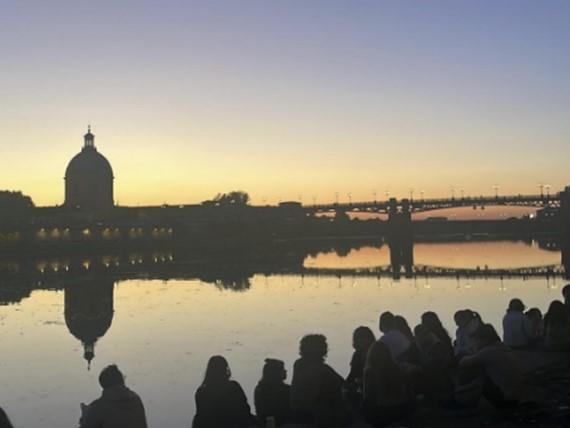
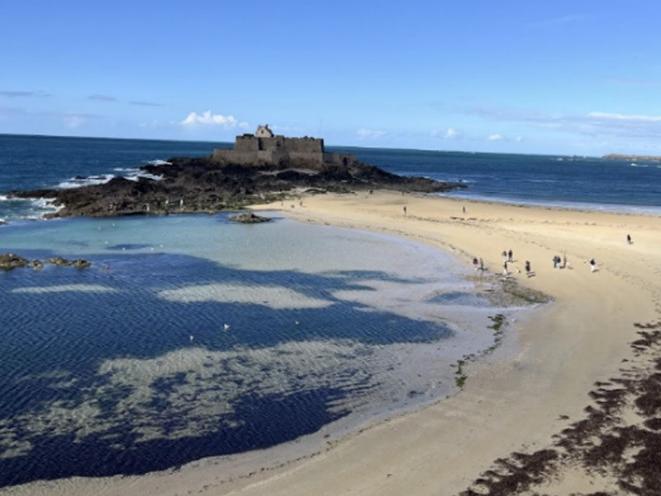
Working only three days a week also gave me plenty of time to travel. Over the past eight months, I’ve explored the Loire Valley castles by motorbike, been caught in a protest and accidentally tear-gassed on my way to buy a pain au chocolat in Tours, gone wine tasting in Bordeaux, watched sunsets by the Garonne in Toulouse, seen a play in the Comédie Française in Paris, strolled around Strasbourg’s markets, and tried crêpe à l’andouillette (a crêpe with an intestine sausage) on a road trip in Brittany.


The best way to discover France, however, is through food. Under the beady eyes of a Frenchman, I helped prepare a traditional Christmas meal: frog legs, snails, scallops, shrimp, oysters, and crab. Through experiences like this, I’ve come to appreciate the French art of slowing down and eating well which I’ll try my best to keep during my final year at Oxford.

In May, I’ll be heading to Granada in Spain to work as a receptionist in a hotel, but I fully intend to return to Orléans soon. For that reason, I won’t be saying au revoir, but rather: À bientôt !