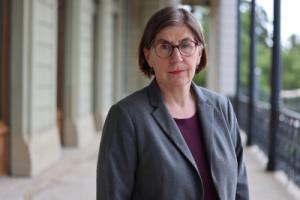
In the late 1980s, I was working in the English-speaking newsroom at Swiss Radio International in Bern when I made a decision that would change my life. At the time I had no idea how much.
I decided I wanted to learn another language.
My first exposure to a foreign language was French at school. At the time, there clearly were some forward-thinking people running education in West Yorkshire as they had introduced middle schools for pupils aged nine to 13. Among the many creative ideas was to start children on French straightaway, with an actual French person coming in to teach us. Back then – this was the 1970s – this frankly bordered on the exotic.
I began to learn German aged 12 and I continued with both languages to A Level.
I read Modern Languages (German) and Philosophy at St. Hugh’s, where my German tutor was the wonderful Margaret Jacobs. She was a force of nature and had a huge influence on me.
Oxford was an amazing experience where I made lifelong friends. I always knew I wanted to be a journalist, so I seized the chance to write for the student newspaper Cherwell about sport. I spent a year In Germany as a Fremdsprachenassistentin. I am not sure how much the girls at the local Realschule learned from me, but my German really improved.
After a year at journalism college in Cardiff (plus more sports reporting for the local radio station), I got my first job at the splendidly named Viking Radio in Hull. There was little need for foreign languages there, to be honest, but within six months I landed a job at Swiss Radio International, based on my radio experience and knowledge of French and German.
So, which other language to learn, I wondered. Italian? Spanish?
I opted for Spanish.
In 1990, I left Bern for a job at the BBC World Service in London and was appointed the Brazil correspondent the following year. Knowing some Spanish helped a bit with learning Portuguese. This was vital as few people spoke English, especially outside the big cities. I travelled the country, covering all manner of stories, from the horrifying such as prison massacres and high-profile murders to the uplifting, among which Carnival in Rio was a definite highlight.
I spent some 23 years at the BBC, based mainly in London, but also in Miami, alongside colleagues from the Spanish Latin American Service. I also spent a few months in Turkey, but I must confess the Turkish language was a challenge too far, and I didn’t progress much beyond the basics.
In my roles in radio, TV and online, I covered news from around the world, but my focus remained the Americas, specifically Latin America and the Caribbean. My final task as the Americas editor for the BBC news website, in fact on my very last day at the BBC, was to cover the death of the Venezuelan President, Hugo Chávez.
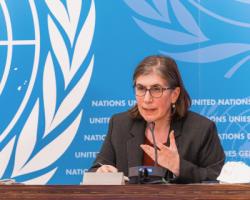
My career path then took me back to Switzerland to work at the UN Human Rights Office in Geneva. I was the first ever media officer for the different human rights committees, known collectively as the UN Treaty Bodies, which oversee implementation of their respective Conventions –- the rights of the child, the rights of persons with disabilities, the fight against racial discrimination and discrimination against women, for example.
After that, I was appointed as a spokesperson for the UN High Commissioner for Human Rights, drafting press releases, organising news conferences, doing interviews, and briefing journalists. I had a similar role at UNHCR, the UN Refugee Agency, as Global Spokesperson for Europe and the Americas. My languages coming in handy again.
I relished the opportunity to travel with different High Commissioners to El Salvador, Guatemala, Peru, Ecuador, Colombia and Venezuela. These official missions included numerous meetings with leaders, officials, and businesspeople but most memorable of all were the many inspiring human rights defenders.
I feel privileged to have worked for the BBC and the UN, and to have had the chance to meet and work with people from so many backgrounds.
I now live in Galicia in Spain with my Mexican husband. Yes, thanks to learning Spanish I met him.
Languages have been at the core of my life and career, and I have no intention of stopping. So, I am ready for the challenge of really improving my Spanish. And then, well, I fancy trying to learn Galician.