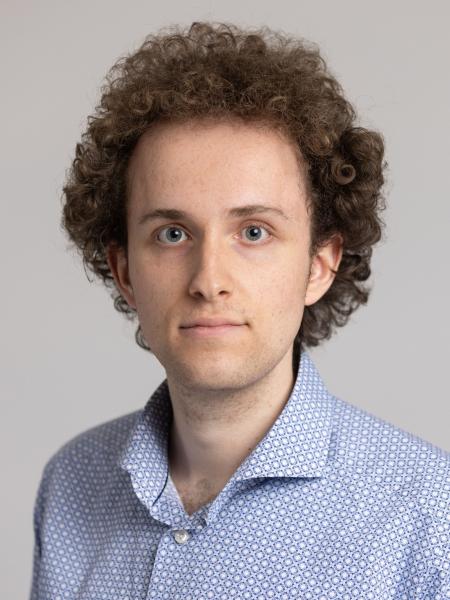
It was lucky that languages were a feature of my education from primary school, and I took to them quickly as ways to engage with other people and, as time went on, with the output of new cultures. After studying French and Spanish to A-level, I opted to read modern languages at university because I couldn’t think of any subject I would enjoy more, and because I was drawn to the opportunity to spend a year abroad, broadly of my own design, midway through my studies.
But rather than pursue the two foreign languages I knew up till that point, I enrolled in French and Beginners’ Portuguese, chiefly because I was – and still am – interested in learning more about histories of empire and race in Africa and the African diaspora. Given their colonial histories, studying the languages of France and Portugal made sense.
I look back fondly on my time at Oxford, where I took to the autonomy that an undergraduate can exercise, attending university lectures in History and English as well as MML and talks by visiting speakers on all kinds of topic. Learning at different scales — in lectures, seminars and one-to-one or two-to-one tutorials — not only meant term was varied but also gave me room to explore my own interests in the Finals Honours School. I remember choosing my Paper VIII authors in conjunction with Claudia Pazos Alonso, and Andrew Counter enthusiastically endorsing my request to write on Aimé Césaire, whom I’d first read in the first year, in the context of surrealism. And my Year Abroad saw me enrol as an Erasmus student at Université Toulouse-Jean Jaurès, where I took courses in French literature, translation and history, and enjoy a stint at Portugal’s oldest and biggest commercial gallery, Galeria 111.
While I didn’t enrol in MML to become a journalist, four years on from graduation I can see that doing so has helped me get to where I am. As an editor at the Financial Times, I’ve written news and features across the paper and had stints on Breaking News and FTWeekend. I’ve interviewed artists and authors such as Marina Warner (herself an Oxford Modern Languages graduate) in London, Kamel Daoud in Oxford and Abdellah Taia in Paris, as well as Adjoa Andoh, Jamaica Kincaid and Teju Cole. In the case of Taia and Daoud, being able to have a conversation in French was a big advantage, and in all instances, working out when someone was saying something new, or bold, was helped by the hours I spent filleting literary critics’ takes on books and writers.
It is a cliché, but I honestly can’t say that I’d have rather studied any other degree than the one I did between 2017 and 2021. Although my studies were disrupted by the pandemic, I took from them a deeper appreciation for the written word, for the form as well as the content of a given text, and I gained practical knowledge and habits of mind that I get to put into practice in a range of contexts today.