What is your area of research?
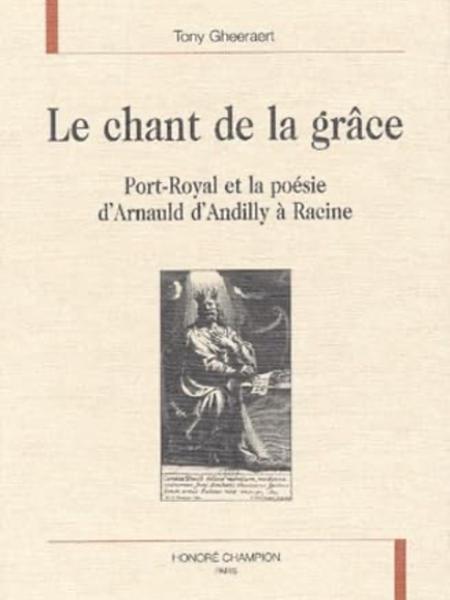
My research focuses on 17th-century French literature, with a particular emphasis on Port-Royal, Pascal, and Racine. I also work on fairy tales and pastoral literature
What do you usually teach when you are at your home institution?
I usually teach the fairy tales of Madame d’Aulnoy and Perrault, as well as Racine’s tragedies. I also work on the yearly Agrégation curriculum (our national competitive exam), which is a great excuse to rediscover overlooked or ‘invisible’ authors. This year, for instance, I’m focusing on Antoinette Deshoulières.
And is the teaching very different to that which Oxford students usually get?
Actually, I felt right at home! I was struck by how similar the classroom dynamic was to our French ‘cours magistraux’—very focused and quite formal. I suppose some academic traditions truly transcend borders.
What have you been looking at during your time in Oxford?
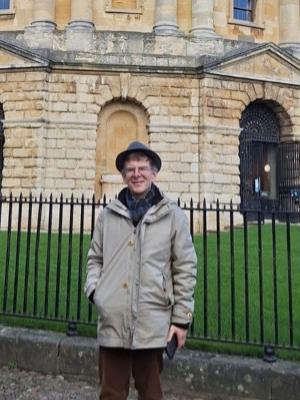
I’ve been exploring a ‘queer’ side of the 17th century that has long been overlooked. After my work on Mélusine, I’ve turned my focus to a ‘queer Racine,’ specifically looking at Iphigénie and Phèdre, which are full of ambiguous relationships. I’ve also been able to consult several key works on the topic here, as Anglo-American scholars have really been pioneers in this field. Researching at Duke Humfrey’s and the Radcliffe Camera has been incredibly inspiring!
What did you talk about with the students you met?
I had the incredible chance to compare a scene from Phèdre with Hamlet’s soliloquy. I wanted to show that Racine’s heroine, much like the Prince of Denmark, is trapped in a state where neither living nor dying is an option: life has become unendurable, yet the afterlife feels too unsettling or terrifying to face.
Had you already been to Oxford?
Yes, but only for a few days, thirty years ago on my honeymoon! I had vivid memories of the chained books in Duke Humfrey’s Library—and thanks to those chains, they’re still there! I also remembered the endless shelves at Blackwell’s; they are still just as infinite, though the covers have certainly changed.
What did you particularly enjoy doing during this stay in Oxford?
First and foremost, the human element: it was such a joy to meet colleagues and students, to attend seminars, and to share what we love! But I also truly enjoyed experiencing college life, which is so unique—especially Formal Hall in gowns and coffee in the SCR. And then, there was the simple pleasure of cycling between the Maison Française and St Catz, greeting the squirrels among the first daffodils along the way.
How do you think we could intensify Oxford MML’s links with Rouen university?
That’s an excellent question. I think we could start by strengthening our research network—perhaps by inviting Oxford colleagues to Rouen for seminars or guest lectures to present their latest work. We could also look into organizing joint conferences or collaborative research projects on shared interests, like 17th-century studies or the pastoral tradition.
We could also explore funding through international partnership schemes in Rouen. While these are temporarily suspended this year for budgetary reasons, they offer a solid framework that we could certainly tap into for our future joint initiatives.
What is a contemporary French book you have enjoyed reading recently?
To be honest, I’ve been reading more non-fiction than novels lately. I really enjoyed William Marx’s Un été avec Don Quichotte. It’s based on his radio series, and it’s a wonderful reflection on the knight-errant. It’s intelligent, light-hearted, and perfect if you’re looking for something that bridges the gap between scholarship and pure reading pleasure.
And to which French classic author(s) do you often return?
I always return to Jean Racine and Blaise Pascal. There is something about their tragic conception of the human condition that leads to deeper self-knowledge. They allow us to access parts of our inner selves that would be almost impossible to reach without the guidance of their writing.