As part of an ongoing research project, Patrick McGuinness and I ran an international workshop on Class in modern French literature. Our aim was to get beyond the well-known names – Annie Ernaux, Édouard Louis, Didier Eribon – and explore the representation of working-class lives and experiences from the end of the nineteenth century to the present day. The workshop was funded by a British Academy Small Grant, and we are extremely grateful for the Academy's support.
The purpose of our project – its intellectual necessity as well as its literary rewards – is best expressed in these words from Annie Ernaux’s Nobel acceptance speech:
“If I look back on the promise made at twenty to avenge my people, I cannot say whether I have carried it out. It was from this promise, and from my forebears, hardworking men and women inured to tasks that caused them to die early, that I received enough strength and anger to have the desire and ambition to give them a place in literature, amid this ensemble of voices which, from very early on, accompanied me, giving me access to other worlds and other ways of being, including that of rebelling against and wanting to change it, in order to inscribe my voice as a woman and a social defector in what still presents itself as a space of emancipation, literature.”
Literature may be a space of emancipation for Ernaux, but it is one which is to be shaped and moulded to fit her purposes, because emancipation itself is an ambiguous gift: it isolates and exiles the working-class writer in ways that it does not for the bourgeois or the aristocratic writer. In Ernaux’s writing – which falls within but also questions and pressurises the genre of autofiction – narratives move between first and third person, between I and she and we, as if to register at the grammatical level the tension between speaking and speaking for that marks out her writing as uniquely grounded in questions of working-class articulation.
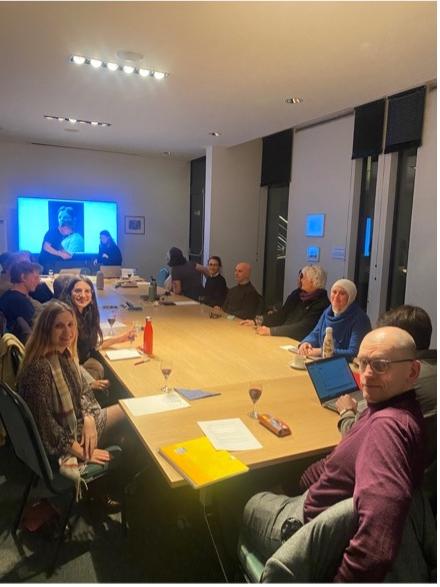
The workshop ran over two days in November at St Anne’s College. Participants included post-graduate researchers, early-career researchers and established academics who travelled from across the United Kingdom, the United States, France, and Belgium. Over these two days, participants discussed how literary texts engage with labour, social mobility, environmental experience, sexuality, and cultural identity.
Several papers focused on the representation of labour and industrial life, including discussions of factory work in texts by writers such as Simone Weil, Georges Navel, Thierry Metz, and Joseph Ponthus. Others considered environmental awareness in proletarian literature of the 1930s and representations of women working in the countryside in the early twentieth century.
A number of contributions addressed questions of identity and social mobility, particularly through the lens of transfuge de classe narratives, exploring how contemporary writers represent movement between social classes and the associated feelings of shame, displacement, or determinism. Other papers examined queer desire, migration and immigrant communities, and the cultural significance of celebrity, music, and sport in working-class contexts.
The workshop highlighted the richness and diversity of this developing subject of study. The texts discussed went far beyond Zola, Ernaux and Louis, all while acknowledging that the work of these writers are important reference points in the wider discussion of literary representations of working-class experiences.
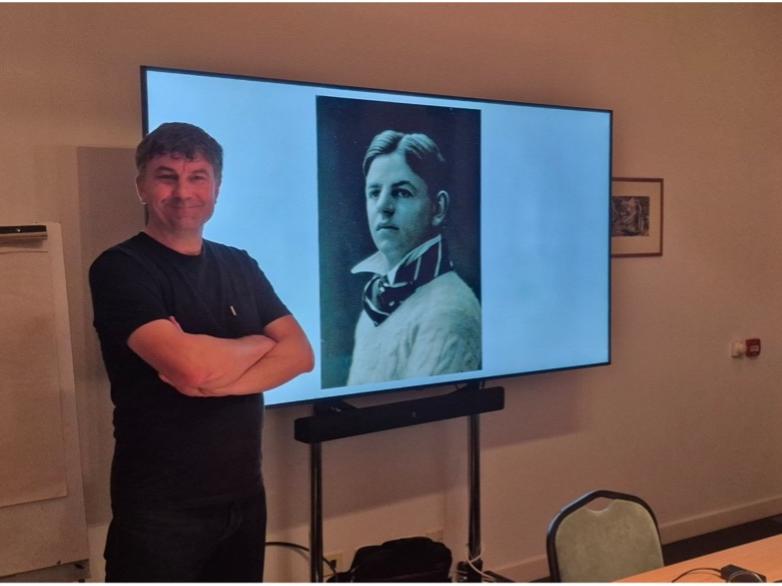
The event was rounded off with an entertaining talk by local historian Maurice East, who spoke about the history of working Oxford. Maurice examined the ways in which the industrial heritage and history of the city – in particular car manufacturing and the Morris factory – is all too often overlooked in favour of the narrative of the university. More details about Maurice and his work are available on his website: https://chippietownietours.co.uk.
The organisers believe that there is a need for our project both to address a lack of sustained discussion of working-class culture in French literature and to assert its importance as a significant and clearly defined area of study and research. We hope that this workshop will mark the beginning of a network which will give Class Studies in French literature a centre of gravity from which we can ask to be represented at conference panels, in special issues of journals, at symposia, and at our discipline’s public-facing events.
This is an area of research that maps directly onto the challenges facing our subject at the present time with declining numbers of young people choosing to study a modern language to GCSE, A-Level and at university. The organisers of the workshop believe that this decline is in part connected to questions of access to other languages and cultures, which are tied up with wider socio-economic contexts. We plan for this project to lead to future public engagement and outreach initiatives.